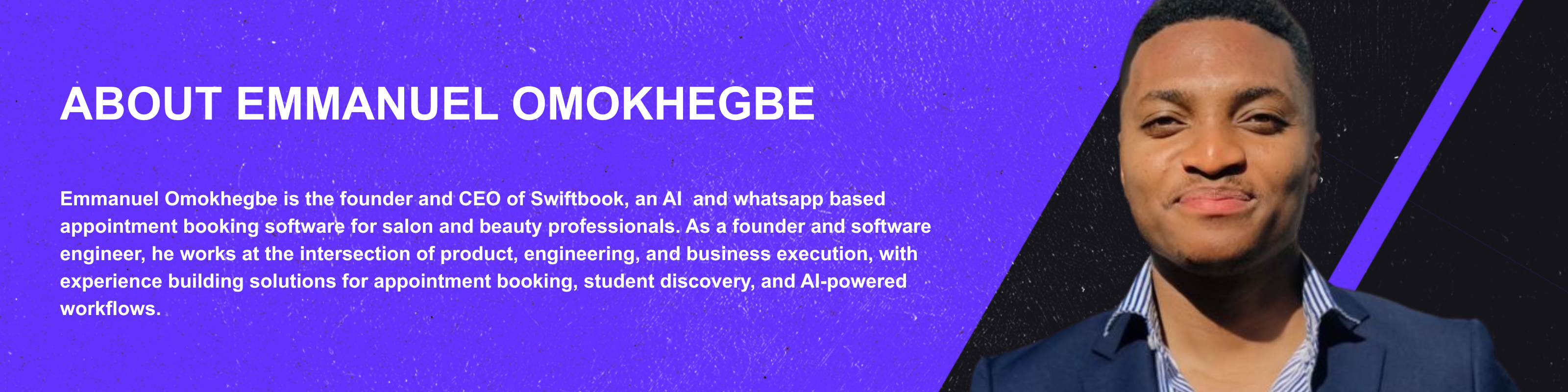
There’s a particular kind of silence that comes at the end of a founder’s rope. It’s not dramatic. There’s no single catastrophic moment. No investor call went wrong. No public humiliation. It’s quieter than that. It’s you alone, staring at a screen, wondering if you’ve been lying to yourself this whole time.
That was me last week. I was done. I had made up my mind. I was going to walk away from Swiftbooked, my third startup, and finally accept what the universe had apparently been trying to tell me for years.
Then Monday happened.
I opened my analytics dashboard, more out of habit than hope, and stopped cold. My users have been growing by at least 50 every single week. Over 150 new users in the last 30 days alone. Not from a press mention. Not from a paid campaign. Just people finding us, trusting us, and signing up. I sat there for a long time.
To understand what that dashboard meant to me, you have to understand where I’ve been.
My first startup was aStudentDream, an AI career platform designed to help high school students find their path through psychometric testing and hobby matching. The vision was real. The passion was real. I even convinced 24 people to join me. But we never shipped. Not a single version. We dissolved before we ever really began, a ghost of a company that lived only in pitch decks and late-night conversations.
The second was Wasty Wealth. This one hurt more because we actually built something. It was an Uber-style waste pickup platform for homes across Africa. We developed a smart waste bin. We secured a patent. For a brief, beautiful moment, we thought we had it. Then government policy shifted. The market wasn’t ready. We had to walk away from a product that genuinely deserved to exist.
Two startups. Two failures. A file folder full of lessons and a confidence that looked strong on the outside but was quietly fracturing. They say the third time is a charm. I wanted to believe that. I needed to.
The idea for Swiftbooked came from a simple, almost embarrassing observation: salons and barbershops across Africa are drowning in WhatsApp messages, and nobody is saving them.
We ran our first batch of customer interviews, and the picture became sharp very quickly. Yes, many of these beauty businesses had no booking system at all. But even the ones that had invested in software, the ones doing things “right”, were still glued to their phones, texting clients back on WhatsApp because that’s where their customers lived.
Picture this. You’re in the chair. Your barber’s hands are halfway through your fade, or your stylist is mid-braid. And their phone doesn’t stop. Notifications. Messages. Calls. The experience suffers. The business suffers. The stylist, exhausted and overstretched, starts to resent the very clients they’re trying to serve.
We built Swiftbooked to solve exactly that. Automated WhatsApp booking for salons and beauty professionals, so stylists and barbers could be fully present with the client in front of them, not the one blowing up their DMs.
We went from idea to launch in six weeks. The first version didn’t even have the WhatsApp integration yet, but we made one decision early that our users loved immediately: clients could book without creating an account. No sign-up friction. No barriers. Just book and go. Simple things done well.
We generated over $300 in revenue from early users. For a product six weeks old, that felt like oxygen.
But startups don’t let you celebrate for long.
We tried our first pricing model, a 2.5% commission per booking processed through Paystack. Integrating Paystack was genuinely seamless, faster and smoother than any African payment gateway I’d worked with before. But we ran straight into a wall we hadn’t anticipated: Paystack’s 48-hour settlement window.
For a large e-commerce business, 48 hours is fine. For a salon owner who just cut twenty heads of hair in a day and needs that money to buy a product tomorrow morning, it was a dealbreaker.
Our phones started ringing. Users wanted their money. They couldn’t wait.
So my co-founder Joseph and I jumped on a call late one night, and we did what founders do. We tore it out and rebuilt it. We refactored the entire payment flow, removed the commission charging system, and pushed the changes live. We finished at 3 am.
We moved to a straightforward SaaS model. R149 for Starter. R399 for Premium. It was cleaner.
But we hit another wall.
African salon owners, many of them running tight margins in an unpredictable economy, were deeply resistant to monthly subscriptions. The conversations were hard. The churn was real. I wrote about it honestly on LinkedIn. The post went viral because a lot of founders related.
After the pricing pivots came the marketing attempts. The frantic, scattered kind founders know well when growth feels out of reach. TikTok content. Community engagement. Outreach campaigns. None of it moved the needle.
Each week felt like pushing a boulder uphill in the rain, only to watch it slide back down. The fatigue was real. The self doubt is louder. That quiet was returning.
Then we made one decision that changed everything.
We hired a marketing team member, a lady who understood the language, the aesthetics, and the aspirations of the very customers we were trying to reach. Her brief was simple: create content that speaks to women in the beauty space. Relatable. Real. Human.
The content resonated. Then it spread. Then strangers started signing up on their own. No prompting. No sales call. No one held their hand through the process. Organic growth. The real kind. The kind you can’t buy.
50 new users a week. 150 in 30 days. That’s what was waiting on my dashboard on the Monday I almost quit.
There’s a myth that the founder who succeeds is the one who never wavers. That’s not true. The founder who succeeds is the one who wavers completely, fully, honestly, and then opens their laptop one more time anyway.
I’ve failed twice. I’ve built companies that didn’t make it. I’ve had patents for products the market wasn’t ready for. I’ve been on 3 am calls rewriting code that was supposed to work. I’ve watched carefully crafted pricing strategies collapse in real time. I’ve created content that disappeared into the void.
And I have learned something that no accelerator program, no startup book, no podcast will teach you as effectively as experience does: the right people will always outperform the right strategy.
We didn’t find our breakthrough through a clever growth hack. We found it because we brought in someone who genuinely understood our users and gave her the space to do what she does best.
One person. One decision. Everything shifted.
We’re building on this momentum now. We’re nurturing our growing user base through email campaigns, staying close to them on WhatsApp, and making sure they know that Swiftbooked isn’t just a tool. It’s a team that shows up for them.
And we’re beginning to fundraise. Because we have something now that no pitch deck can manufacture: proof. Real users. Growing organically. Week over week. In a market everyone told us it was too hard to crack.
Maybe they were right that it was hard. They just underestimated how long we were willing to stay in the room.
To every founder reading this on their dark Monday: open the dashboard one more time. You might be surprised what’s been quietly growing while you were wanting to quit. The market doesn’t always celebrate you loudly. Sometimes it just shows up. 50 users at a time.