
A conversation is currently unfolding in SaaS that many global commentators are treating as a new phenomenon. Usage-based pricing is having its moment, AI has made the cost of running software visible in a way it never was before, and flat monthly subscriptions are buckling under the weight of variable compute costs that nobody budgeted for. Everyone is scrambling to figure out how to charge for software when the marginal cost of running it is no longer close to zero.
I find this conversation a little amusing, not because it is wrong, but because if you have spent any time building software for township and informal markets in South Africa, your customers solved this problem years ago. They just did it with airtime, not with a SaaS pricing strategy.
When we started testing Pasella, our WhatsApp commerce platform, with spaza shops across South Africa, the subscription model felt like the natural starting point. Predictable revenue, clean unit economics, easy to plan around. The problem was that spaza shop owners did not see it that way at all. A fixed monthly charge that arrived regardless of whether business was good or slow was not a pricing model to them; it was an open-ended commitment they had no interest in making. Honestly, once I understood how they managed their money day to day, I could not blame them.
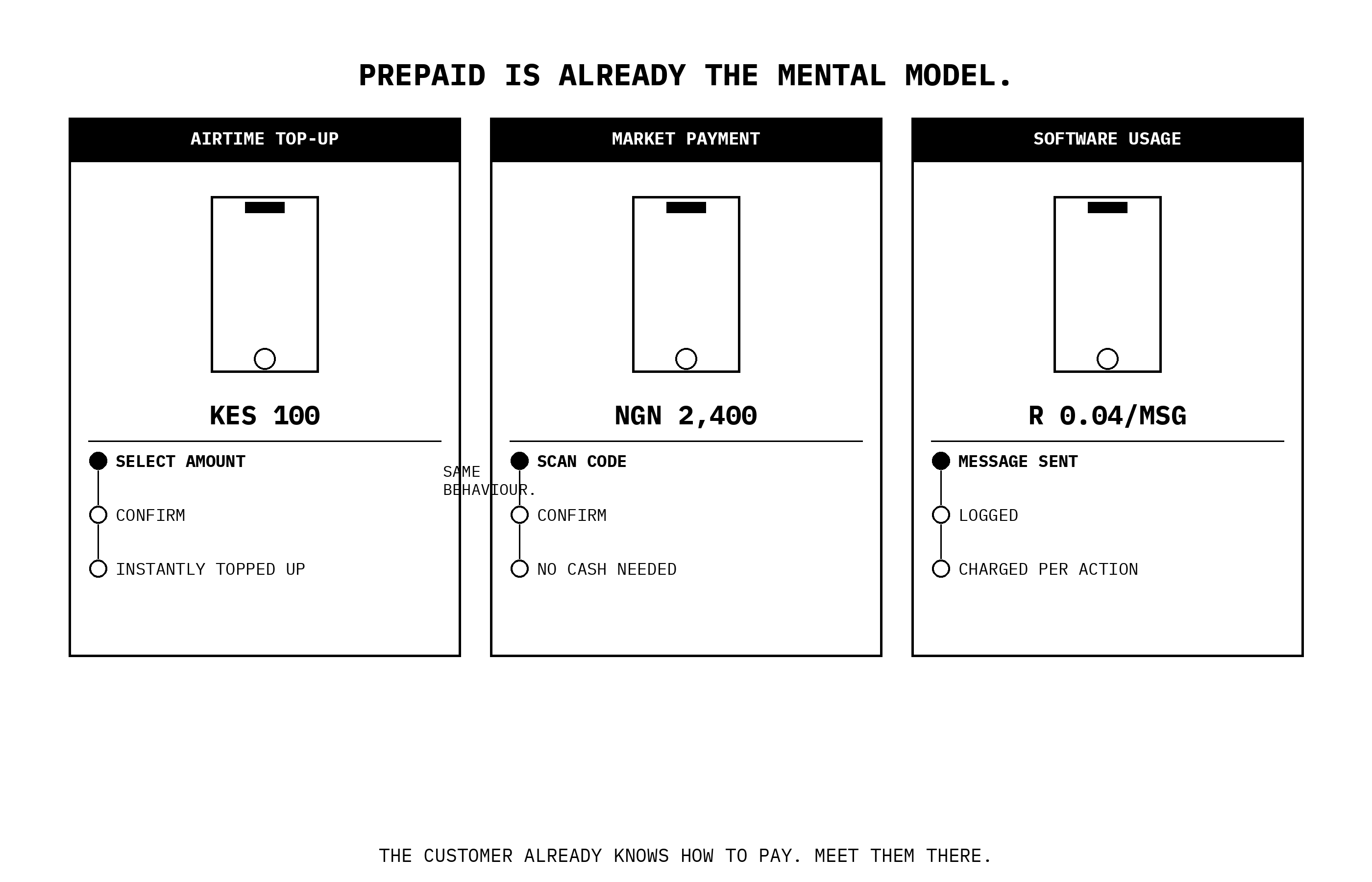
We switched to pay-per-usage, and the resistance dropped almost immediately, not because we discounted anything or rebuilt the product, but because the mental model already existed in that market. These owners were already transacting daily with Flash, Shop2Shop, MamaMoney, and HelloPaisa. Pay for what you use, top up when you need more, and stop when you do not. That is just how commerce works at that level of the economy, and all we had to do was price our product the same way instead of forcing a subscription model onto people who had never operated that way in their lives.
That experience changed how I think about the pricing conversation in emerging markets entirely.
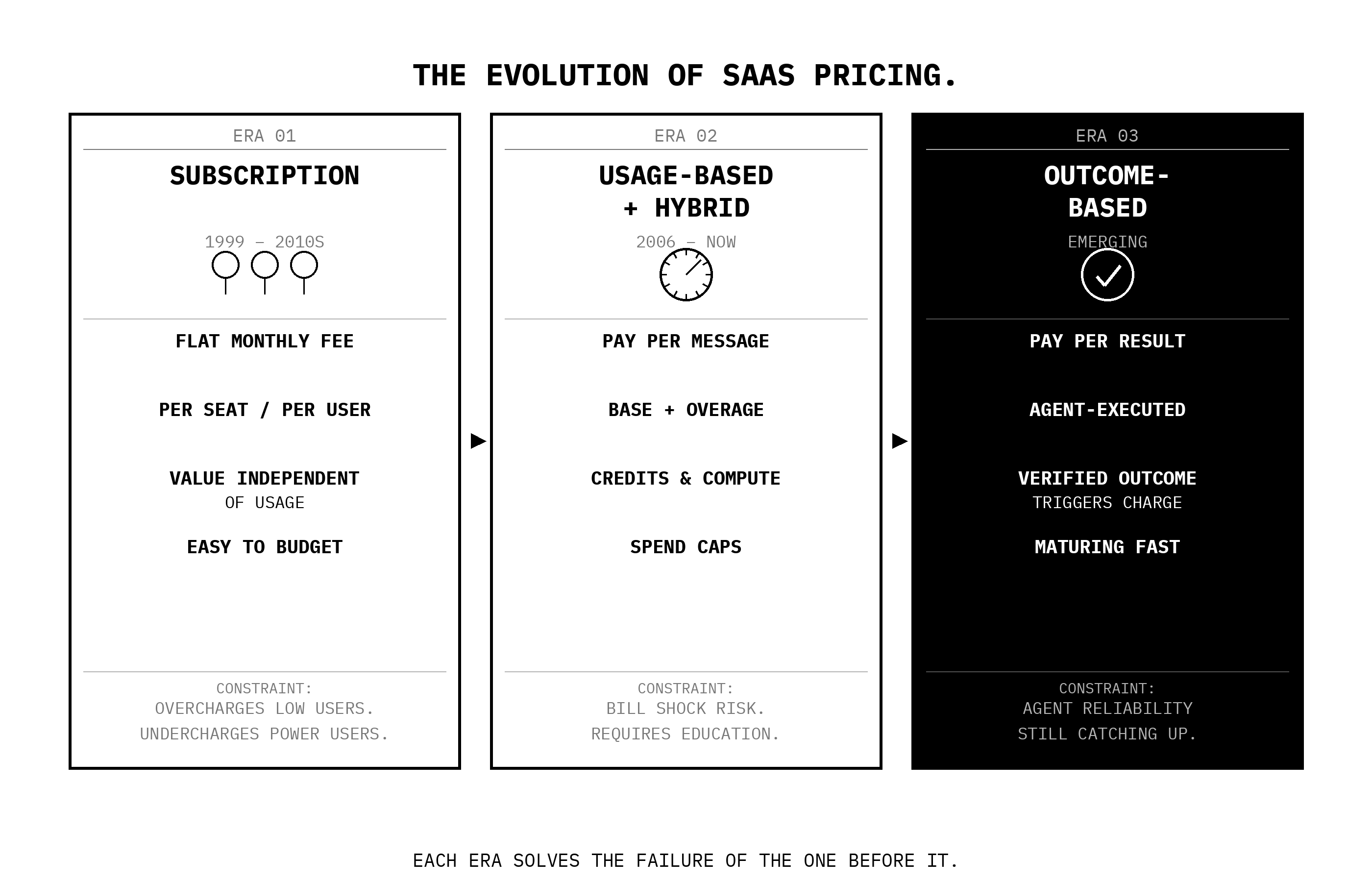
Salesforce popularised the per-seat subscription in the early 2000s because it was genuinely simpler than enterprise licensing and, crucially, the marginal cost of adding a new user was nearly zero at the time. That logic held for two decades and built an entire industry around it. Then generative AI arrived, and every prompt, every agent step, every API retry started consuming real compute that costs real money, and suddenly the economics that made flat pricing sustainable stopped making sense. Wing Venture Capital put it plainly: companies offering AI-powered products now face actual marginal costs per inference, and seat-based pricing was never designed to absorb them.
So globally, SaaS is now catching up to a reality that informal and township markets in South Africa have always known, which is that most small businesses do not have stable monthly revenue, and a charge that arrives whether the month was good or slow is not a pricing model; it is a liability sitting on someone's balance sheet.
The numbers tell the same story at scale. GSMA's 2025 report found that Sub-Saharan Africa processed over 81 billion mobile money transactions in 2024, accounting for 74% of all global mobile money activity, with over 1.1 billion registered accounts, more than two-thirds of the global total. This is not a market that needs to be educated about paying for what you use. It has been doing it for fifteen years and has built deeply ingrained financial habits around it.
When I talk to founders building B2B software in Joburg or Lagos, the friction around usage-based pricing almost always sits on the vendor side rather than the customer side. The customer understands it immediately because it maps to how they already think about spending money. What trips up the vendor is the engineering underneath it, because usage-based pricing sounds simple until you are three months into building it and you realise you need reliable event tracking, real-time aggregation, per-customer attribution, fraud controls, and a dashboard that shows customers their consumption before the invoice arrives. Miss any of those pieces, and you do not have a pricing model; you have a trust problem waiting to happen.
The practical default for most B2B products is a hybrid model: a modest base fee that gives the customer a predictable floor to budget around, with usage-based charges that kick in above a threshold.
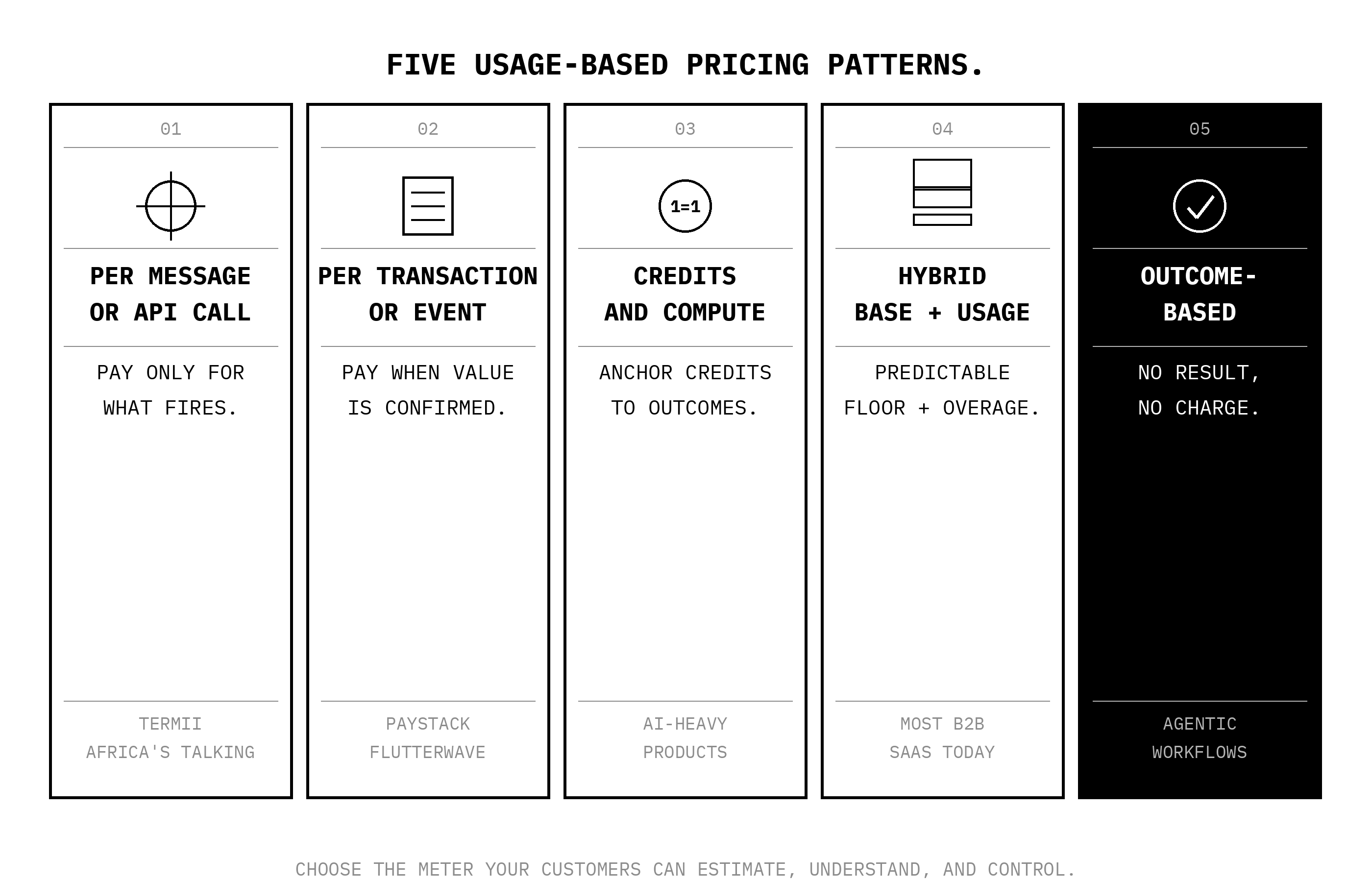
Metronome's 2025 State of Usage-Based Pricing report found that 85% of SaaS companies surveyed had adopted some form of usage-based pricing, with nearly half doing so in the last two years. Among companies monetising AI features specifically, 51% have gone hybrid. Africa's Talking charges per SMS, per voice minute, and per USSD session across more than 20 African markets. Termii, used by over 10,000 businesses including Moniepoint and PiggyVest, prices per message and per OTP. Paystack and Flutterwave charge per transaction with no monthly fee. None of these companies had to convince their customers that pay-as-you-go made sense because the customer already lived that way. They just had to build the infrastructure that made it work reliably.
Bill shock. A marketing campaign suddenly multiplies message volume overnight, a background job runs unchecked over a long weekend, an AI agent retries on errors for six hours straight, and the customer finds out at invoice time when the damage is already done. In a market where a single unexpected charge can permanently damage a customer relationship, spend visibility is not a feature you add later. It is the product. Real-time usage dashboards inside your app, spend caps with auto-pause, alerts at 50% and 80% of a bundle — these need to exist before you scale. Every engineering incident in a metered system is also a billing incident, and your customers will remember the billing one long after they forget the engineering one.
Talk to five customers this week and ask how they actually prefer to pay, not what they think you want to hear, but how they genuinely manage software costs in their business. The spaza shop owners we spoke to at Pasella did not need a pitch once the model made sense to them. They needed to see it worked the same way as the vendors they already trusted every day. Then map your product's core activity to a value metric your customer already tracks naturally: messages sent, invoices issued, deliveries completed, payslips generated. If your pricing unit is something they have to learn from scratch, you will spend more time explaining the bill than building the product, and that is not a place you want to be.
The founders who get this right end up with something better than cleaner unit economics. They end up with customers who trust them, because the pricing never once surprised anyone.